Not sure if your case
qualifies?
Take the free 2-minute candidacy check — no email, no phone number, no commitment. Or book a free consultation with our dental team.
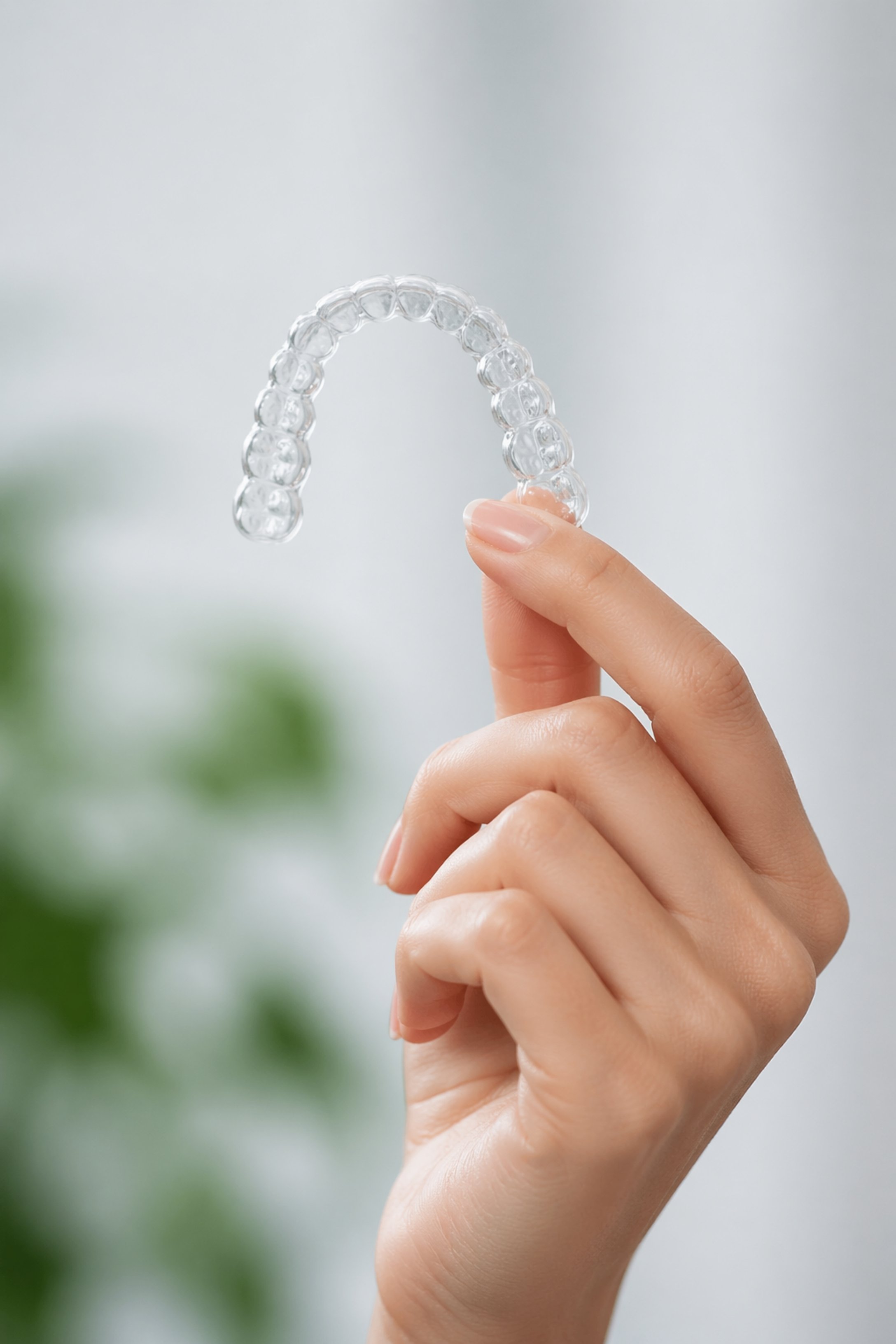
From minor crowding to noticeable gaps — here's an honest look at what Hello My Teeth aligners treat, what they treat with care, and when we'll refer you to a specialist instead.
Over 85% of adults have at least one of these conditions. The good news? Clear aligners handle them beautifully, with results in as little as 3–6 months.
Teeth overlap or twist when your jaw doesn't have enough room. Crowding makes brushing and flossing harder, increasing the risk of cavities and gum disease. Aligners gently create space over time.
Mild to moderateNoticeable spaces between teeth — whether from genetics, missing teeth, or jaw growth. Gaps can trap food and affect your confidence. Aligners close gaps evenly without overcorrecting.
Mild to moderateUpper front teeth extend too far over the lower teeth. A mild overbite is normal, but excessive overlap can cause jaw pain and uneven wear. Aligners gradually reposition the teeth into balance.
Mild to moderateLower teeth sit in front of the upper teeth when you close your mouth. Mild dental underbites — caused by tooth position rather than jaw structure — respond well to aligner therapy.
Mild cases onlySome upper teeth sit inside the lower teeth instead of outside. Left untreated, crossbites cause uneven enamel wear and gum recession. Aligners shift the misaligned teeth into proper position.
Mild to moderateFront teeth don't touch when your mouth is closed, making it hard to bite into food. Often caused by habits like thumb-sucking. Aligners help close the gap when the cause is dental, not skeletal.
Mild to moderateTeeth that are rotated, tilted, or angled unevenly. The most common reason people seek aligners. Whether it's one stubborn tooth or several, we straighten them into a naturally even line.
Mild to moderateA combination of minor issues — slight crowding plus a small gap, a rotated canine with mild overlap. Most real-world cases are a mix. Our dentists design a plan that addresses everything together.
Mild to moderateHad braces as a teen but skipped your retainer? Teeth shift back over the years. Aligners are a fast, discreet way to correct relapse — most cases finish in 3–4 months because the teeth have been moved before.
Typically mildFor mild-to-moderate cases, clear aligners deliver comparable results with less disruption to your daily life.
Some conditions need more than clear aligners can offer. If your case falls here, our dentists will explain why and help you find the right specialist — no charge, no pressure.
When the jaw itself is misaligned (skeletal issue), aligners can't reposition bone. These cases typically require braces, jaw surgery, or both.
Teeth rotated more than 20° are difficult to grip with an aligner tray. Traditional brackets offer better control for significant rotational corrections.
Aligners are excellent at horizontal shifts but limited when teeth need to be pulled down (extruded) or pushed up (intruded) significantly.
Moving teeth through unhealthy bone and gums risks making things worse. We'll ask you to treat the gum disease first, then reassess for aligners.
Take the free 2-minute candidacy check — no email, no phone number, no commitment. Or book a free consultation with our dental team.